
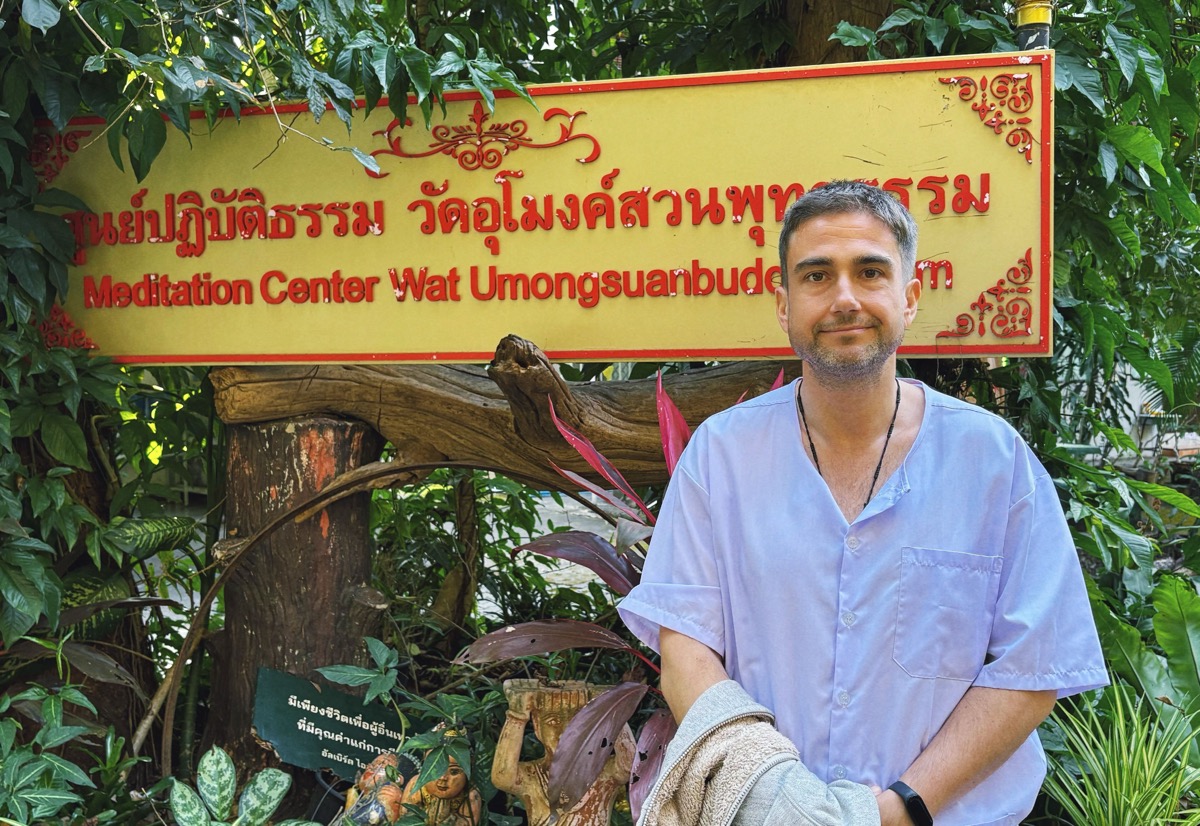
5th Temple Visit: Still Searching for Release from Suffering
A 3-day retreat at Wat Umong, Chiang Mai, Thailand
This marks my fifth temple visit and the fifth blog post in this series. I've created a dedicated page listing all my temple experiences at MikesBlog.com/temples if you'd like to explore them.
This was my fourth visit to the same temple: Wat Umong in Chiang Mai, Thailand. My first temple experience was in China—an eye-opening introduction—while these last four at Wat Umong have grown progressively deeper and more transformative.
This time, I went alone—no friends, no father-in-law—just me and about 15 other participants from around the world. Chiang Mai is bustling during this season, drawing many international visitors, and the retreat center was full.
The Book: "To See the Truth"
I re-read the same powerful book, To See the Truth, for the fourth time—twice during this 3-day retreat and twice before. I first encountered it during Temple Visit 3 and revisited it in Temple Visit 4. It beautifully summarizes everything essential in Buddhist practice. After four readings, I finally feel I've truly absorbed its teachings.
For a deeper reflection on the book, see my earlier post from Temple Visit 3. Here are my key takeaways:
- Samatha Meditation: The concentration-based practice many people associate with meditation. You focus on a single object (breath, tip of the nose, abdomen, etc.) to achieve deep calm and even blissful "highs." It's enjoyable and somewhat addictive—I highly recommend starting here!
- Vipassana Meditation: The insight practice emphasized by Buddhist monks. It predates some forms of Samatha but is considered the core path to liberation. In Vipassana, you observe and detach from the five aggregates (khandhas): physical form (body), feeling (sensations), perception (memory/recognition), mental formations (thoughts, emotions, volitions), and consciousness. You become the "knower" or impartial watcher, realizing there is no permanent "self."
The book advises using Samatha to calm and steady the mind first—like clearing the table—before switching to Vipassana for true insight. This time, I understood and applied this much better. When my focus drifted during watching, I'd return to the breath for that profound calm, then shift back to observing.
Emerging Defilements and True Progress
The deeper you go, the more subconscious defilements surface: anger, fear, hatred, greed—deep-rooted patterns most of us suppress. The book and my experience confirm this can feel more painful initially than ignoring them. But it's like extinguishing a house fire: once the blaze is out, you can easily spot and douse small sparks.
Amid rapid changes in the world, my businesses, and relationships, these arose intensely—but facing them is the essence of real meditation, beyond just the blissful states of Samatha.
One profound moment: After meditating seated for 90 minutes, intense leg pain arose. I wanted to move, but then realized—I am not the pain. The sensation dissolved completely for many minutes. The same happened with a headache. By observing it as one of the five aggregates, as impermanent human suffering, I released attachment to it. (The pain did return later during longer two-hour sits, but those moments of release were extraordinary.)
A Surreal Encounter with Impermanence
In the final hours before my wife Wendy picked me up, I sat by the pond where visitors feed hundreds of pigeons and fish. While reading on a bench, at exactly 1 PM, a loud thud sounded in front of me.
A pigeon had fallen from a tree and lay dying just four feet away—directly in my line of sight. It struggled to rise, beak gasping for air four or five times, eyes locked on mine in its final moments.
Then, horrifyingly, a group of other pigeons descended, pecking at its eyes and trampling the body. I found a broomstick and large leaf from the groundskeepers, gently swept the pigeon onto the leaf, and carried it to a secluded area under a tree, covering it with leaves for a peaceful rest.
When I told Wendy later, she said the pigeon had sacrificed itself—taking on a burden or pain meant for me. A profoundly surreal reminder of impermanence and suffering.
Hundreds of pigeons live and die there daily, but this one connected directly with me in its final breaths. Life is suffering (dukkha), yet realizing we are not a separate "self"—we are interconnected—offers the path to release.
In our age of AI and rapid technological change, these ancient Buddhist insights feel more relevant than ever.
Comments